

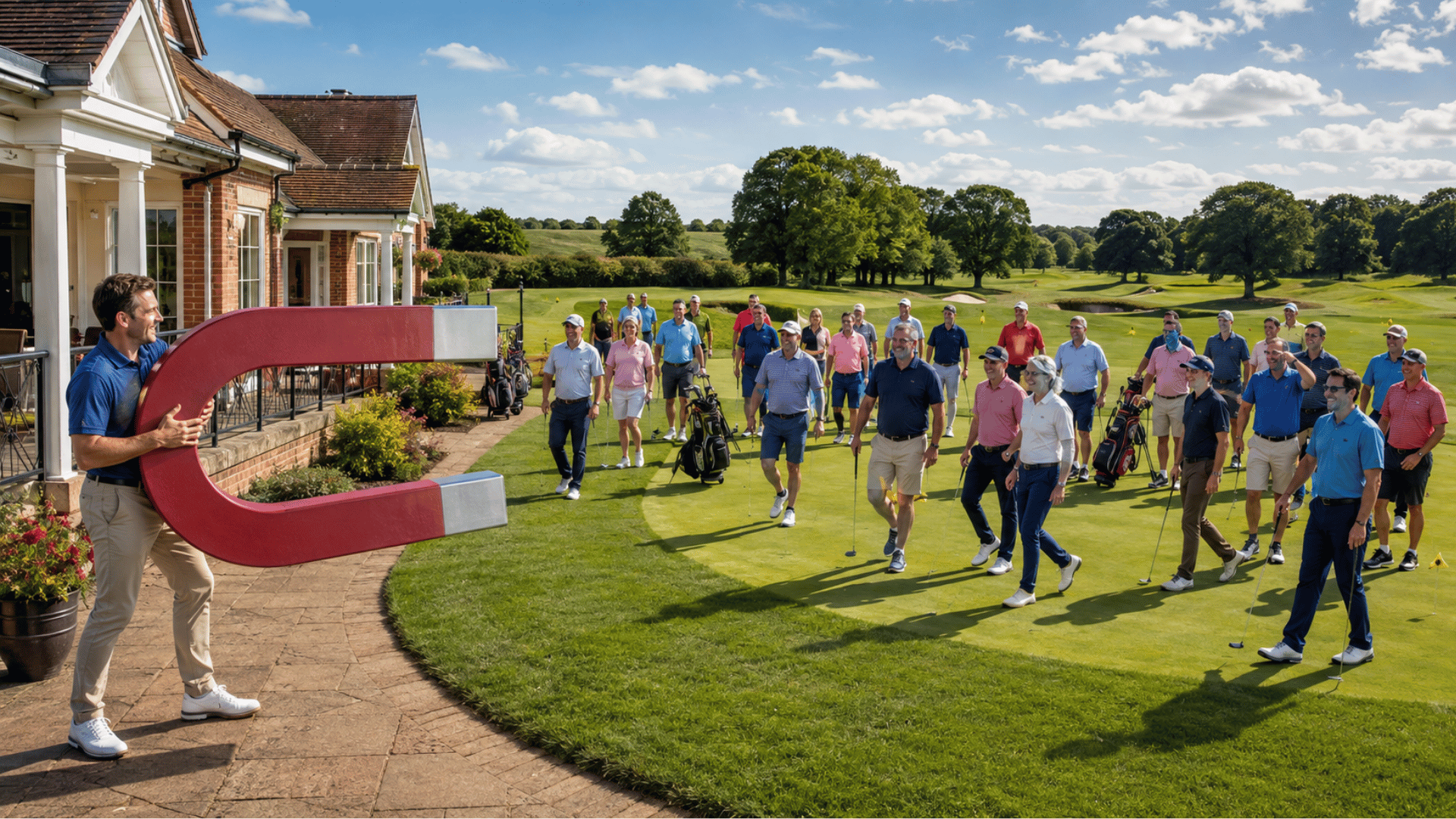
Increase your Golf Day Revenue
Many golf clubs treat golf society marketing as a short-term promotional campaign.
They update the society package, send an email and place a few posts on social media. Some may also run a paid advert. If the enquiries do not arrive, they often assume the package costs too much or demand has fallen.
In reality, one advert or email rarely determines the success of your society marketing.
A club can lose the booking at several points. The website may contain old information. Staff may take too long to respond. The organiser may struggle to understand the payment terms. In other cases, nobody follows up after sending the initial quotation.
The question is not simply: how can your golf club attract more societies?
It is: how can you attract the right organisers, convert more enquiries and generate repeat revenue?
Start with the dates you want to sell
Before promoting a society package, decide which dates the club actually needs to fill.
There is little value in generating enquiries for busy periods if members and existing visitors already fill those tee times. Instead, focus the marketing on dates that will produce genuine additional revenue.
This could mean promoting selected weekdays, quieter months or afternoon tee times. The opportunity will vary between golf clubs.
Your campaign can then feature the relevant availability instead of promoting the same generic package throughout the year.
Clubs should also consider the type of booking they want to attract. Traditional societies, corporate golf days, charity events and informal groups may all require different messages.
A corporate organiser may care more about hospitality and event support. A traditional society could place greater value on the course, food and overall price.
The objective should not simply be “more societies”. It should be more of the right bookings on commercially valuable dates.
Make better use of your existing society data
Most golf clubs already hold years of society data. However, that information often sits across booking systems, inboxes, spreadsheets and individual staff records.
Having the data does not automatically make it useful.
As a starting point, separate previous organisers who booked from those who enquired but went elsewhere. The club can then identify repeat organisers, lapsed customers, corporate contacts and higher-value groups.
It should also record why previous enquiries failed to convert. Price may have caused the loss, but availability, slow responses or unclear information could also be responsible.
This segmentation matters because different organisers need different messages.
A previous customer can receive an invitation that recognises their earlier golf day. Someone who enquired but did not book may need reassurance about availability, value or the booking process.
Even one additional question can improve the quality of your data. Asking, “Have you previously organised or booked a golf day with us?” can place that person into a more relevant marketing journey.
The club should also distinguish between the organiser and the golfers who attended. The organiser normally chooses the venue, coordinates the group and manages the payments. That relationship has far more long-term commercial value than a general list of participants.
Use email automation to start conversations
Once the club has organised its data, an automated email sequence can help create new conversations.
Automation should not remove the personal element. Instead, it should make sure the club follows up consistently and does not forget valuable contacts.
The first email could introduce the latest packages and available dates. A second email could focus on the course, hospitality and organiser experience. The final email could ask whether they would like a quotation, telephone call or provisional date.
Each message should give the recipient a simple reason to respond.
In one golf-day campaign managed through Your Golf Marketing, a three-email sequence produced 3,000 total sends. It achieved an average open rate of 52% and generated 61 direct replies. A
The 61 replies provided the most valuable result. The sequence did not simply generate email opens. It created genuine conversations with potential organisers.
When someone replies, the automation should stop. A named member of staff should then take responsibility for the opportunity.
Make it easy for the golf day organiser to book your club
The society page on the club’s website should do more than display a brochure and a general enquiry form.
Organisers often compare several venues. They want to understand the cost, package, availability and booking process without carrying out extensive research.
Outdated pricing immediately creates doubt. Someone planning a 2027 golf day should not find a brochure with 2025 prices.
The webpage should explain the current packages, group requirements and relevant availability. It should also cover food options, deposits, payment deadlines and cancellation terms.
The club’s approach to poor weather may also affect the decision. A clear and fair policy can give the organiser greater confidence.
Recent course photography will help sell the venue. However, clubs should also show the clubhouse, catering and people enjoying a golf day. Testimonials and a sample itinerary can provide further reassurance.
These details are not simply administrative. They form part of the club’s marketing proposition.
The course will naturally influence the organiser’s choice. However, they will also consider how easy the day will be to arrange. Fast communication, flexible packages and clear payment terms can all differentiate one club from another.
In many cases, the easiest club to work with may prove more attractive than the cheapest.
Use a more specific call to action
“Enquire now” does not always give organisers enough direction.
A more specific call to action tells them what will happen next. “Check available dates”, “Request a tailored quotation” or “Ask us to hold a date” all provide greater clarity.
The enquiry form should collect enough information for a useful response. This could include the preferred date, approximate group size and catering requirements.
However, the form should remain simple. Too many questions may discourage people from completing it.
After submission, an immediate email can confirm receipt of the enquiry. It can also provide the current brochure and explain when the organiser will receive a personal response.
The club should then add the opportunity to its CRM pipeline and assign a member of staff.
Use paid marketing to support the journey
Paid social media can help clubs reach organisers who are not actively searching for a venue.
Clubs can build campaigns around specific dates, packages or locations. They can also use existing data to create more relevant audiences, where the appropriate permissions allow.
The creative should promote the full golf-day experience.
An empty course photograph may demonstrate its condition, but organisers are purchasing more than a round of golf. They also care about the welcome, clubhouse, food, drink and atmosphere.
Paid social media should work alongside search marketing. Someone searching Google for a golf society package already has a clear interest in booking.
A properly optimised society page can help the club appear in these searches. Paid search can provide more visibility for valuable terms and locations.
The club can also retarget people who visit the society page or engage with an advert. Where the correct tracking and permissions exist, known contacts could receive an automated email after viewing the page.
This creates a connected journey. The person sees the campaign, visits the website and receives a relevant follow-up. They then have several opportunities to start a conversation.
Treat every enquiry as a sales opportunity
Paid marketing becomes far less valuable if the club does not manage the resulting enquiries properly.
Response speed can have a major effect on conversion. An automated acknowledgement helps, but personal follow-up remains essential.
If the organiser provides a telephone number, a timely call can answer several questions. It can also move the opportunity forward faster than a long email exchange.
Every enquiry needs a clear owner.
Staff can move each opportunity through defined CRM stages. These may include new enquiry, contacted, quotation sent, provisional date, deposit requested, confirmed and lost.
The CRM should also record the event date, group size, source and estimated value. Each record needs a clear next action.
This structure gives staff a clear view of their priorities. It also helps management understand the value of the active pipeline.
The system can create a reminder after staff send a quotation. It can also flag provisional dates that will soon expire. If the club loses an enquiry, staff should record the reason.
These lost reasons provide useful marketing insight.
If availability causes most losses, the club may need to change its campaigns. If price regularly creates the problem, the package or target audience may need reviewing. Slow response times could suggest an internal process issue.
A CRM provides the structure, but staff must use it consistently. Technology cannot compensate for unclear ownership or missed follow-ups.
Make the experience generate the next booking
The customer experience starts with the first response, not when the organiser arrives.
Clear communication before the event can remove much of the organiser’s stress. The club should confirm the timings, payments, catering and player information in advance.
Staff must also understand any competition, buggy or hospitality requirements. Most importantly, the organiser should know exactly who to contact if anything changes.
The operational team needs access to the information collected during the sales process. The organiser should not have to repeat details because someone left them in a separate inbox.
The experience on the day will then influence whether the group returns. The welcome, course condition, food and handling of problems all matter.
If the day goes well, start the repeat booking conversation before the organiser leaves.
The club could offer to hold a similar date for the following year. A follow-up email can then thank the organiser, request feedback and confirm their interest.
Staff should add the opportunity to the CRM with a future follow-up date. This avoids relying on someone to remember several months later.
Clubs should not view a successful golf day as a single transaction. A strong organiser relationship can generate revenue for many years.
Should your golf club discount?
Not automatically.
Discounting can help fill quieter dates, but it needs a clear commercial purpose. A club should avoid reducing prices on golf days that may have booked anyway.
Adding value may provide a better option.
For example, the club could let the organiser play free once the group reaches a minimum size. It could also offer an early-booking benefit, catering upgrade or competition support.
The promotion should only apply to dates the club genuinely wants to fill. Staff should then measure whether it created additional revenue.
Clubs must also consider the total value of the day. Revenue may extend beyond the golf package into food, drink, buggies and golf-shop purchases.
The cheapest package will not always produce the best result. Equally, the cheapest venue will not always win the booking.
Connect the complete society journey
Increasing society revenue rarely depends on one new marketing platform.
It requires the club to connect its available dates, existing data, website and paid campaigns. The sales follow-up and customer experience must then support that marketing.
Clubs should measure the commercial outcome rather than focusing only on enquiries. Important figures include response times, conversion rates, average booking value and repeat bookings.
Recording the source of each enquiry will also show which marketing channels produce revenue. Meanwhile, lost reasons can highlight weaknesses within the sales process.
At Your Golf Marketing, we help clubs connect each stage into one clear and measurable journey.
Attracting the organiser is only the beginning. The real opportunity is to make your club easy to choose, easy to book and worth returning to.